

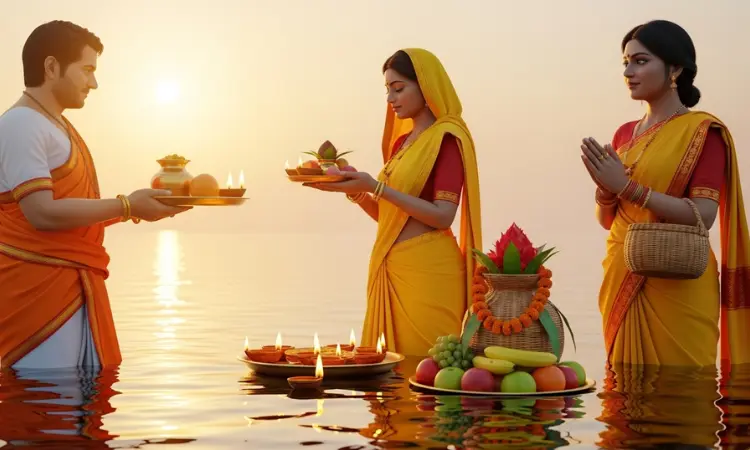
Chhath Puja is one of the oldest Hindu festivals celebrated in India. This four-day festival honors the Sun God and takes place twice a year. More than 50 million people across Bihar, Jharkhand, Uttar Pradesh, and Nepal celebrate this sacred occasion. The festival involves strict fasting, holy bathing in rivers, and offering prayers to both the setting and rising sun.
What makes Chhath Puja special is its focus on thanking nature for the gift of life. Unlike other festivals, it requires no priests or expensive rituals. Devotees follow simple traditions that families have passed down for thousands of years.
What is Chhath Puja?
Chhath Puja is a beautiful Hindu festival dedicated to the Sun God, also known as Surya Dev. People celebrate this special occasion to thank the sun for giving life and energy to Earth. The festival is also called Surya Shashti because it falls on the sixth day of the Hindu month of Kartik.
Why is it celebrated?
Families celebrate Chhath Puja to show gratitude to nature and pray for health, happiness, and prosperity. Devotees worship the Sun God and Chhathi Maiya, who is believed to protect children and bring good fortune to families.
Where is it mainly observed?
This Hindu festival is most popular in Bihar, Jharkhand, and Uttar Pradesh. People in these states celebrate with great joy and devotion. The festival is also observed in Nepal and other parts of India where people from these regions live.
Importance of the Sun God and Chhathi Maiya
The Sun God gives light and life to all living beings. Chhathi Maiya is the sister of the Sun God and protects families. Together, they bless devotees who perform the rituals with pure hearts.
Chhath Puja 2025 Dates
Chhath Puja 2025 will be celebrated in late October and early November. Here is the complete schedule for all four days:
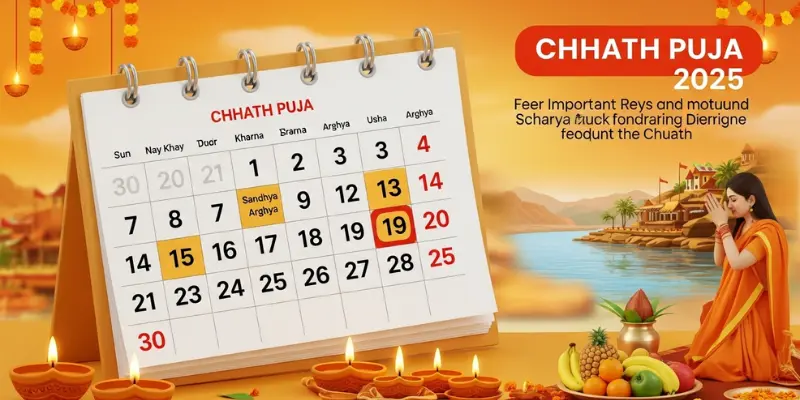
Day 1 – Nahay Khay (October 28, 2025)
The first day is called Nahay Khay. On this day, devotees take a holy bathing in rivers or ponds. They clean their homes and prepare simple food. This day marks the beginning of spiritual cleansing.
Day 2 – Lohanda and Kharna (October 29, 2025)
The second day is known as Kharna. Women fasting start a strict fast without water. In the evening, they prepare kheer (sweet rice pudding) and chapati. After offering prayers, they break their fast and share the prasad with family members.
Day 3 – Sandhya Arghya (October 30, 2025)
The third day is very special. Families go to riverbanks to offer Sandhya Arghya (evening prayers) to the setting sun. They stand in water with bamboo baskets filled with fruits, thekua, and other offerings. Folk songs fill the air as communities celebrate together.
Day 4 – Usha Arghya (October 31, 2025)
On the fourth and final day, devotees wake up early for Usha Arghya (sunrise prayers). They offer prayers to the rising sun and then break their 36-hour fast. Families gather for celebrations and share prasad with everyone.
How families prepare for these four days
Families start preparations weeks before Chhath Puja. They buy fresh fruits, make thekua, and arrange bamboo baskets. Homes are cleaned thoroughly. Women who observe fasting follow strict rules of purity.
Regional differences
While the main rituals remain the same, some traditions differ slightly. In Bihar, people sing special Chhath Puja songs. In Jharkhand, communities organize large gatherings. Uttar Pradesh celebrates with grand events at Ganges ghats.
- Chhath Puja 2025 | Sacred Sun God Festival
- Halloween 2025 | Spooky Fun – Costumes & Wishes
- Govardhan Puja wishes
- Diwali Wishes 2025
- Happy Holi Wishes for Family, Friends & More
History and Origin of Chhath Puja
1. Ancient connection with Sun worship
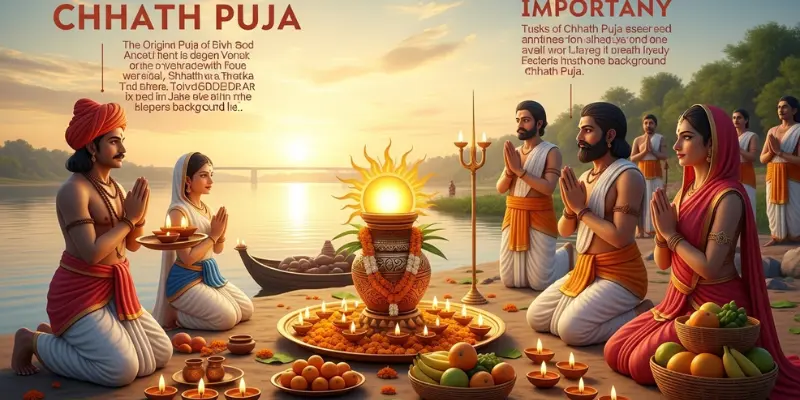
Sun worship is very old in India. Ancient people understood that the sun gives life to everything. They prayed to Surya Dev for good health and strong crops.
2. Mention from the Mahabharata and Ramayana
Stories say that Draupadi and the Pandavas performed Chhath Puja rituals to solve their problems. In the Ramayana, Lord Rama and Sita also worshipped the Sun God after returning to Ayodhya. These stories show that Chhath Puja has deep roots in Hindu culture.
3. How Chhath evolved into a modern-day festival
Over time, Chhath Puja grew into a major festival. People passed down traditions through generations. Today, it is one of the most important cultural heritage celebrations in eastern India.
Chhath Puja Rituals and Traditions
1. Nahay Khay (First Day)
- Meaning and steps of the ritual
- Nahay Khay means “bath and eat.” Devotees take a dip in holy rivers like the Ganges. They wear clean clothes and prepare food in a pure way.
- Foods eaten
- People cook simple meals with rice, bottle gourd, and lentils. These foods are light and pure. Everyone in the family eats the same meal to start the festival together.
2. Lohanda and Kharna (Second Day)
- Fasting and evening offering
- Women start fasting from sunrise and do not drink even water. In the evening, they prepare kheer, rice, and fruits. After sunset prayers, they offer this food to the Sun God and break their fast.
- Spiritual purpose of self-purification
- This day teaches self-control and discipline. Fasting helps devotees focus on spiritual thoughts and forget worldly worries. It brings inner peace and strength.
3. Sandhya Arghya (Third Day)
- Worshipping the setting sun at riverbanks
- This is the most colorful day of Chhath Puja. Families gather at riverbanks dressed in traditional attire. Women carry bamboo baskets filled with offerings on their heads. They stand in water and offer arghya (water offering) to the setting sun.
- Songs, chants, and community prayers
- The atmosphere becomes magical with Chhath Puja folk songs. People sing together and pray for their families. This community celebration brings everyone closer, no matter their background.
4. Usha Arghya (Fourth Day)
- Offering prayers to the rising sun
- Before dawn, devotees return to the river. They wait for suryodaya (sunrise) and offer prayers to the morning sun. This ritual completes the Chhath Puja cycle.
- Breaking the fast and family celebrations
- After offering Usha Arghya, women break their strict fast. They eat the prasad and drink water. Family gatherings follow with joy and happiness. Everyone celebrates the successful completion of rituals.
Cultural Significance of Chhath Puja
- Symbol of gratitude to nature and the Sun
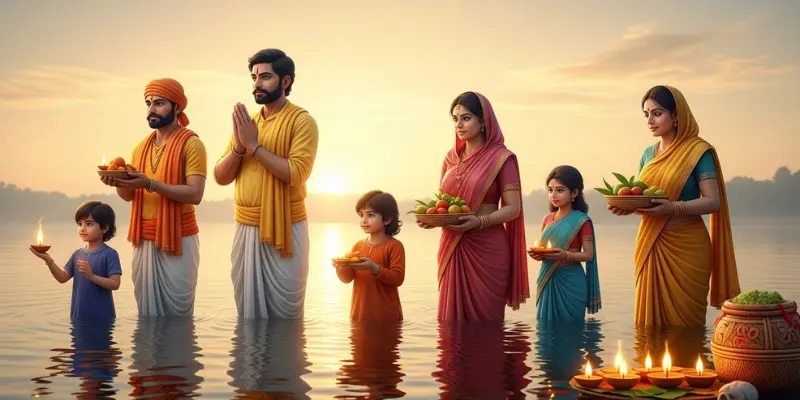
- Chhath Puja teaches us to respect nature. The sun gives light, warmth, and life. This festival reminds everyone to be thankful for natural gifts.
- Promotes purity, discipline, and self-control
- The strict rituals teach discipline. Devotees follow rules of purity in food, thought, and action. This practice builds strong character and devotion.
- Role of women and family unity in the festival
- Women play the main role in Chhath Puja. They perform fasting and rituals with dedication. However, the whole family supports them. Men help with preparations, and children assist in small tasks. This creates strong family bonds.
- Communities coming together beyond caste or religion
- Chhath Puja brings people together. Rich and poor, people from all backgrounds celebrate side by side. Everyone shares the same space at riverbanks. This unity shows the true spirit of the festival.
How Chhath Puja is Celebrated Across India
- Bihar & Jharkhand: Grand riverbank rituals and songs
- Bihar Chhath Puja and Jharkhand Chhath Puja are famous for their grand celebrations. Thousands gather at ghats. The sound of devotional songs echoes everywhere. People light diyas and create a beautiful atmosphere.
- Uttar Pradesh: Yamuna and Ganga ghats celebrations
- Uttar Pradesh Chhath Puja takes place at major river ghats. Cities like Varanasi and Prayagraj see huge crowds. The Ganges becomes a center of worship during these four days.
- Delhi & Mumbai: Urban devotees making temporary ponds
- Chhath Puja in Delhi and Chhath Puja in Mumbai show how traditions adapt to city life. Since natural rivers are far, people create temporary water bodies. Parks and open spaces transform into Chhath ghats. Migrants from Bihar and nearby states keep their traditions alive.
- Nepal: Traditional Chhath celebrations in Terai regions
- Nepal also celebrates Chhath with great enthusiasm. People in Terai regions follow similar rituals. Families gather at rivers and ponds to worship the Sun God.
- How Indian communities abroad celebrate Chhath
- Indian communities in countries like the USA, UK, and UAE organize Chhath Puja 2025 events. They find local water bodies or create artificial ponds. This shows how cultural heritage travels across borders.
Traditional Foods of Chhath Puja
- Common offerings
- The most important food item is thekua. This sweet, crunchy prasad is made with wheat flour, jaggery, and ghee. Other offerings include kheer, rice laddoo, sugarcane, coconuts, and seasonal fruits. All items must be pure and prepared with clean hands.
- Importance of purity and homemade food
- Every item used in Chhath Puja offerings must be made at home. Store-bought items are not used. This ensures purity. Families avoid onion and garlic during preparations.
- How families work together to prepare prasad
- Making thekua and other prasad is a family activity. Women lead the cooking, while others help clean, arrange, and pack items in bamboo baskets. This teamwork makes preparations special and fun.
How to Celebrate Chhath Puja at Home
Step-by-step guide for beginners
If you want to celebrate Chhath Puja at home, follow these simple steps:
- Clean your home thoroughly
- Buy bamboo baskets, fruits, and ingredients for thekua
- Prepare prasad with pure intentions
- Find a clean water source nearby (river, pond, or even a large water container)
- Follow the four-day schedule
- Maintain cleanliness and discipline
Essentials needed
You will need bamboo baskets, fresh fruits, thekua, diyas, incense sticks, clean clothes, and water vessels. Keep everything ready before starting the rituals.
Safety tips while performing rituals near water
Always be careful near water. Hold children’s hands. Don’t go too deep into rivers. Choose safe spots on riverbanks. If using a pond, check the depth first. Safety comes first during devotion.
Eco-Friendly Chhath Puja Tips
- Use of natural materials
- Follow environment respect by using banana leaves, earthen pots, and natural decorations. Avoid plastic bags and synthetic materials. Use clay diyas instead of electric lights.
- Avoid plastic and chemical-based decorations
- Plastic pollutes water and harms nature. Chemical colors damage rivers. Choose natural, biodegradable items for all offerings and decorations.
- Local drives promoting “Green Chhath”
- Many communities now organize eco-friendly celebrations. They encourage people to clean riverbanks after rituals. Some groups provide natural materials for free. Join these Chhath Puja environmental awareness movements to protect nature while celebrating.
Chhath Puja Around the World
- Growing celebration among Indian and Nepali communities abroad
- As people migrate to different countries, they carry their traditions with them. Chhath Puja celebrations now happen worldwide. Communities organize special Chhath Puja 2025 events in parks and community centers.
- Temples and community gatherings in the USA, UK, and UAE
- Hindu temples in foreign countries help organize Chhath Puja. They arrange for water tanks and all necessary items. Indian and Nepali families come together to celebrate just like back home. This keeps the cultural heritage alive for younger generations born abroad.
FAQs About Chhath Puja
1. When will Chhath Puja 2025 be celebrated?
Chhath Puja 2025 will be celebrated from October 28 to October 31, 2025. The main days are Sandhya Arghya on October 30 and Usha Arghya on October 31.
2. What are the four main days of Chhath Puja?
The four days are:
- Nahay Khay (bathing and eating pure food)
- Kharna (fasting and evening offerings)
- Sandhya Arghya (sunset prayers)
- Usha Arghya (sunrise prayers)
3. Why is fasting important during Chhath Puja?
Fasting shows devotion and self-control. It helps people focus on spiritual thoughts. The strict fast from Kharna to Usha Arghya teaches discipline and builds inner strength.
4. Can anyone perform Chhath Puja rituals?
Yes, anyone can perform Chhath Puja rituals. While traditionally women lead the fasting, men and children also participate in prayers and preparations. The festival welcomes all who have faith and devotion.
5. What are the main offerings to the Sun God?
Main offerings include thekua, fruits like bananas and coconuts, sugarcane, rice laddoo, and water. All items must be fresh, pure, and prepared at home. These are placed in bamboo baskets and offered during arghya.
Conclusion
Chhath Puja carries a beautiful message of purity, faith, and gratitude. This Hindu Sun God festival teaches us to respect nature and appreciate the gifts we receive from the sun. The four days of rituals bring families together and strengthen community bonds.
The festival shows that real devotion needs discipline and self-control. From Nahay Khay to Usha Arghya, each step has deep spiritual meaning. Whether celebrated on the banks of the Ganges or in urban areas like Delhi and Mumbai, Chhath Puja keeps traditions alive.
Preserving this cultural heritage is important for future generations. As we celebrate Chhath Puja in 2025, let us remember to keep our rituals eco-friendly. Let us come together as communities and families to honor the Sun God with pure hearts.
Share Chhath Puja 2025 wishes and Chhath Puja greetings with your loved ones. Send Chhath Puja messages to spread joy. This festival reminds us that when we show gratitude to nature and support each other, we create a better world for everyone.
